


RIPE 93 has kicked off in Sofia - city of wisdom, Roman ruins, and yellow brick roads. As always, you can view the slides, you can watch the recordings, but if you want to get to the bottom of what's really going on, read this daily meeting blog!
Friday
With over 600 participants joining us onsite and online, RIPE 93 has officially come to a close!

After a night of dancing, lightning talks were perhaps just the right length to match everyone's attention span and ease us into the morning plenary session. The plenary started with Eric Andrei Băleanu, InterLAN-IX, sharing the lessons of building the regional IXP. In the early 2000s, they had no idea how to run an IXP, but slowly they found their way, and in 2008 joined Euro-IX which helped the team gain the necessary knowledge. Since then, their network grew beyond Romania and became a regional point of interconnection.
The plenary then continued with João Luis Silva Damas, APNIC, talking about the DNSSEC KSK Rollover. Have you noticed that a few weeks ago, the rollover happened? APNIC ran measurements to identify issues after the rollout and received useful feedback from the operators community to fix them.

James Cowie then presented on the Hidden Geography of the Borderless Internet, exploring the relationship between the geography of Internet number resource registration and routing. For most of the cases, legal and operational homes for the prefixes are the same but some of them don’t fit in that box. The key takeaway? There's nothing inherently wrong with these discrepancies. As James pointed out, the concept of a country on the Internet is far less straightforward than it might seem. Beneath the borderless Internet lies a hidden geography worth exploring.
There were talks about IETF at RIPE but Jen Linkova reminded us again why we should care about IETF. Jen promised that it was the last time you heard from her (until the next RIPE Meeting). Why participate? You may have different needs and use cases than others. It is important to share this, and to try helping to solve this in the protocols. Jen received thanks at the mic for her own excellent IETF work on the IPv6 standards.
Timo Hilbrink kicked off the closing plenary with a discussion on the impact of US sanctions on domain names and other parts of the Internet. His talk during Tuesday's plenary had already sparked plenty of discussion, making this an opportunity to hear more perspectives of the community.
Are we prepared for such a situation? The general feeling was that we might not be, at least not yet. And the concerns go well beyond the US. Political shifts in European governments could also have implications for the Internet.
Randy Bush highlighted the interdependencies between critical Internet infrastructure, pointing to the relationship between, for example, RPKI and DNS. An "oops!" moment that captured just how complicated things could get.
Joe Abley offered another perspective, reminding everyone that while we may not yet fully understand the problem, building walls to eliminate external dependencies would go against the very nature of the Internet we've built. And judging by the long queue at the microphones, the community had plenty more to say. This is clearly a conversation that is far from over.

Tobias Fiebig, TU Wien, shared his experience debugging production systems. This type of operational experience is what makes the RIPE meeting such a valuable event in the true spirit of sharing knowledge between operators. DNS was still involved in this talk….by the way.
The RIPE Chair team then took over, with the Code of Conduct Team Report that received two reports at RIPE 93. The team is currently investigating the cases.
On to the traditional tech team update whereupon Menno Schepers shared that we reportedly drank about 1,000 shots of espresso (this number might be corrected next week). This meeting, was incredibly “boring” - no water leaking in the server room, no creative patching - but "boring" means good. We do hope for another “boring” (a.k.a smooth, steady, catastrophe-free) RIPE meeting next year!

And just like that, we finished the RIPE 93! Congratulations to Babak Farrokhi and Antonio Prado for being re-elected for another term at the Programme Committee and the new Working Group chairs. Thank you to the outgoing WG chairs, our host BIX.BG, sponsors, and all of you, who made RIPE 93 such a success! As always, shoutout to our best [human] stenos! See you all or most of you in Vilnius!
Thursday
After the Whisky BoF the night before, there may still have been a few lingering fumes in the air, and perhaps a few fewer people in the room, but Day 4 of RIPE 93 kicked off with the perfect wake-up combo: IPv6 and Database.
IPv6
This WG session was a welcome continuation of RIPE 92 with a couple of updates on presentations made in Edinburgh.
Saleem Bhatti from the University of St Andrews returned to explain the ‘why’, ‘what’ and ‘how’ behind the Identifier Locator Network Protocol (ILNP), after a fair few questions were asked when he first presented it at RIPE 92.
The idea is to separate a device's identity from its network location, making it easier to support multihoming and privacy. By using IPv6 and DNS, ILNP can offer an approach to Internet addressing that works with existing IPv6 networks and applications without requiring changes to routing or switching. A new way of approaching Internet addressing without having to reinvent the entire Internet. Saleem shared demonstrations using FreeBSD to show how ILNP can dynamically manage traffic across multiple network paths.
Another Part 2 from RIPE 92 saw Wilhelm Boeddinghaus from Route 128 GmbH providing a follow up on IPv6-only network design with WinCLAT. Microsoft has now officially released the feature that allows IPv4-only applications to work on IPv6-only networks. With WinCLAT now available on Windows, Mac and Linux, Wilhelm explained that the door was open for IPv6-only enterprise networks.

He looked at changes on how Windows handles IPv4 addresses and tackled questions about DHCPv4 Option 108, including how to tell devices to use IPv6 when you're trying to get rid of IPv4 in the first place.
“So let's talk about boring stuff about documents”. With these words, Jen Linkova from Google took us through the latest IPv6-related work at the IETF, covering everything from IPv6-only deployments in 5G networks and updated requirements for home routers to NAT64, prefix delegation and proposals for more IPv6 loopback addresses.
She also had a proposition since operators won't come to the IETF, the IETF will come to them. There's a plan to hold an IETF v6ops interim meeting during a BoF slot at RIPE 94 (with no strings attached). So, no excuses then…
Next up, Remco van Mook was on stage with the presentation Nothing Left to Take Away, although it turns out there's still quite a lot he'd like to take away…

While IPv4 isn't disappearing anytime soon, Remco questioned why we're still maintaining all the associated infrastructure when applications really just need an IPv4 address to connect to. His proposal would allow IPv4 traffic to travel across IPv6 infrastructure without the usual baggage of IPv4 subnets, ARP and separate gateways.
Database
In the parallel database world, Edward Shryane, RIPE NCC, kicked off with his (according to the chair) always-delightful operational update. There was improved authentication, a revamped “My Resources” page and, at long last, version history on the RIPE Database website. Almost two-thirds of updates now use API keys or SSO, while only 1% of Abuse-C contacts still need validating this year.
Ed also outlined a major clean-up of the RIPE NONAUTH database and asked for feedback on making phone numbers optional for LIR contacts. Kaveh Ranjbar, Whisper Security, then looked at the future of RDAP, proposing an opt-in referral mechanism that would let resource holders point users to their own RDAP servers for more-specific networks. That could mean fewer duplicate objects and fewer lookups ending in a dead end.
James Bensley, inter.link, wrapped things up with the perennial headache of ambiguous AS-SETs. His advice: use hierarchical AS-SETs and specify your data sources. From there, the discussion moved into RPKI, filtering and whether it is still worth fixing IRR tooling or time to move on. Plenty left for the coffee break, then.
Address Policy I
Over in Address Policy WG, Franziska welcomed attendees and noted they should enjoy the 11am slot because which WG got stuck with a 9am slot was a matter of some dispute behind the scenes.
Angela kicked-off with a policy update. There’s quite a lot going on across five the RIR service regions. For a straightforward snapshot of ongoing discussions by theme, she included this helpful slide:

Hervé Clément, ASO AC / Orange SA, then gave an overview of what the ASO AC is responsible for and what they were currently focused on. He noted that they were seeking nominations for Seat 9 on the ICANN Board of Directors. Since Christian Kaufman is already filling Seat 10, this means nobody from Europe is eligible (though of course RIPE NCC service region is a little larger than that).
Marco Schmidt, RIPE NCC, presented three items for consideration on behalf of Registration Services: the size and transferability of IPv4 assignments to IXPs, an update on their work to verify legacy resources without contract, and whether we should change our approach re: the IPv4 Waiting List.
Leo Vegoda then presented the updated proposal (2026-01: Simplify assignment of first ASN) that he and Urban Suhadolnik had developed on, which drew from an earlier attempt from Urban and Tobias Fiebig. This latest version is much more straightforward: each organisation with addresses from the RIPE NCC can get its first ASN without having to undergo needs assessment. Subsequent requests, or ASN requests from people who get their addresses from someone other than the RIPE NCC will still have to be assessed.
Marco then took back to the stage to present on his policy proposal “Clarifying Audit and Policy Compliance Frameworks for IPv6 policies”, which he said was not a very sexy proposal. We disagree, Marco. The proposal adds a more explicit scope, removes some outdating phrasing, and adds new sections on audits and closure of LIRs. It just depends what you’re into.
DNS
On the DNS side, the morning was all about making things safer, leaner and, in one case, a little more local. Two talks - from Joe Abley (Cloudflare) and Ginerva Fabrizio (University of Twente) - looked at post-quantum security and what it means for DNSSEC. Quantum-resistant cryptography is still something DNSSEC will need to figure out, and the presentations explored how we might get there before quantum computers make today’s crypto look a little too retro. Next came Willem Toorop, NLnet Labs, with a simple idea for cutting traffic to the DNS root servers: put a copy of the root zone on the local resolver and answer those queries locally. Fewer packets heading out, fewer unnecessary round trips, less work for the root servers. Sometimes optimisation really is just keeping things at home.
The RIPE NCC DNS update from Leon Grasmeijer brought things even closer to home, with a call for organisations in Bulgaria to consider hosting an AuthDNS server. There are currently relatively few local instances, so if you have the infrastructure and feel like giving DNS in Bulgaria a little boost, this one’s for you.
And finally, two very quick AoBs: one on improving how TLDs report their statistics, and another asking for contributions to the Check My DNS tool.
Address Policy II

The second Address Policy session started in the kitchen. Remco van Mook went there for his RIPE policy metaphor: a bit of a mish-mash, with grandma’s old utensils still sitting next to things nobody uses anymore and the newer tools that have been added over the years. His proposal was to start moving towards a clearer RIPE policy manual, first by agreeing a framework and bringing related material together, then dealing with inconsistencies later. Baby steps, as Remco put it. The room seemed broadly supportive, with the usual warning that tidying up policy text can very quickly turn into changing policy text.
From there, Remco took us rather further afield with IPv6 and extra-terrestrial networks. The question was not so much whether IPv6 works in space, but how to stop future address-policy decisions from creating trouble for the assumptions we make about terrestrial networks today. With work already happening around networking beyond Earth, he argued for clearer boundaries between address space used here and whatever might eventually be designated for off-planet use. Earth is in space, as one audience member was reminded, but latency still has opinions.

Then it was back down to Earth with a bump. James Kennedy, KIPA, looked at users of IPv4 PA space and whether the database does enough to show which organisations are actually using address blocks. His proposal was to make organisation information mandatory when PA space is assigned or sub-allocated to a third party. That prompted the familiar balance between better data and more work for LIRs, plus the question of whether this belongs in Address Policy or the Database WG. After kitchens and outer space, a database argument felt almost reassuringly normal.
IoT
The IoT Working Group session began with a lighthearted realisation: much like an Irish pub, it temporarily found itself with "no chairs." (Not my joke; from the STAFF ROOM). With regular chairs Anna Maria Mandalari and Ramona Marfievici unavailable in person, Yevheniya Nosyk and Anna Wilson expertly stepped in to steer a highly technical session. The agenda centred heavily on securing the expanding IoT landscape, focusing on device visibility, network privacy in constrained environments, and looming European security regulations.
Muhammad Sangeen from the University of Twente opened the presentations with a deep dive into the internet-scale classification of IoT and non-IoT devices. Highlighting the massive scale of recent DDoS attacks driven by compromised hardware, Sangeen introduced a passive methodology to classify devices using just a single TCP SYN packet. This enables them to easily distinguish IoT botnet activity from general-purpose scanning and preemptively flag unexpected traffic patterns at the network-operator level.
The focus then shifted to privacy, with Martine Sophie Lenders from TU Dresden presenting on DNS over CoAP (RFC 9953). Standard encrypted DNS protocols like DoH or DoT are often too heavy for constrained microcontrollers operating on networks with low throughput and high packet loss. Lenders detailed how DNS over the Constrained Application Protocol provides encrypted communication for these environments. Crucially, Martine demonstrated that encryption alone doesn't prevent eavesdroppers from distinguishing DNS queries from regular data traffic based on metadata leaks, outlining a strategy to "elide, resize, and disguise" packets to protect user privacy.
Rounding out the session, regular chair Anna Maria Mandalari joined remotely to deliver a critical update on the EU Cyber Resilience Act (CRA). With strict mandates for IoT manufacturers, (including 24-hour early warning vulnerability reporting and stringent compliance standards) becoming mandatory in December 2027, the timeline for industry preparation is shrinking rapidly. Anna issued a strong call to action for the RIPE community to actively participate in the process of publishing the 17 technical standards related to this matter.

Community Plenary
The role of the RIPE Chair is to “keep RIPE running well”. In that spirit, RIPE Chair Mirjam Kühne shared recent developments. For example, the work being done to update ripe-793 and ripe-861 - the documents covering the RIPE Code of Conduct team processes and the roles of Working Group Chairs. Mirjam also thanked all the volunteers who contribute to the RIPE community such as the RIPE Meeting mentors, Meet&Greet team and RIPE Fellowship Coaches. She made a special shout out to Ondrej Sury, a RIPE Fellowship Coach aka “the man who saved the Internet”. Daniel Karrenberg also spoke briefly about the Rob Blokzijl Foundation’s work.
The RIPE NRO NC representatives Hervé Clément, Andrei Robachevsky and Constanze Bürger (who are now a well-oiled presentation machine) provided an update about the third version of the RIR Governance Document. Hervé made a bold claim - that the NRO NC has wrapped up their work and this might be the last presentation we see from them on ICP-2. For the record, the trio has presented updates on progress made at each RIPE Meeting since RIPE 90.
RIPE NCC’s Fellowship Coordinator, Michela Galante, spoke about the evolution of the RIPE Fellowship Programme, and how it’s been working since it was revamped. The RIPE Fellowship is now a four month-long journey supported by a coach from the community, aimed at helping new participants find their voice in the RIPE community. If you know talented people who could benefit from this programme - the call for RIPE Fellowships for RIPE 94 and RIPE 95 is open until 23 November.
With the fellows being asked to move across the stage for a photo, the stenos managed to capture possibly the most accurate meeting minutes of the week:

BoFs
In Connecting Research and Operations, Jelena Cosic opened with the obvious question: is there a gap between academic research and real-world operations? Judging by the number of people heading for the mic, yes. Daniela Brauner from GÉANT pointed to one reason why: researchers are rewarded for novelty and papers, operators for keeping things running. But what annoys an operator every day can also make a perfectly good research question. Giovane Moura from SIDN Labs and TU Delft followed with examples ranging from internships and data sharing to secondments and informal collaborations. He also managed to publish a paper on how academics should collaborate with industry. If you want network operators to read it, Giovane, maybe try an RFC next time. The discussion eventually settled on time as the main problem: six-month internships can help, but longer relationships tend to get you further.

Meanwhile, anyone who thought they could escape AI by choosing the other BoF was out of luck. Practical AI had hype, sceptics and, before any of that, an important correction: the RIPE Dinner badge lied. Dinner started at 19:30, not 20:00. Ana Wilson then gave everyone flying home the next day a reassuring story about Qantas Flight 32, the Airbus A380 that suffered an engine failure shortly after take-off. Her point was less about aircraft and more about what happens when automation stops being enough. “I don’t want to hear what’s broken, I want to hear what’s working,” was one of the lines from the cockpit. Useful advice for pilots, network operators and probably anyone debugging at 3am.
Steffen Wahl of Route 128 followed with the less cinematic side of Practical AI: bug hunting. AI-assisted tools are getting much better at finding and reproducing vulnerabilities, while the number of CVEs explicitly crediting AI is still small but growing. The less exciting bit remains the same: somebody still has to verify the finding, patch the software and check the code nobody else is checking. The chairs wrapped up with a poll on whether RIPE should do more with AI, perhaps even a Working Group. One participant saved everyone some time by answering yes to everything.

Wednesday
Put away your plenaries, pick your favourite working group, and make sure you're in the right room - it's Wednesday at RIPE 93!
Connect
The Connect WG kicked off with all chairs noting that all their terms will coming to an end at RIPE 94. They reminded the WG that there is an open call for volunteers interested in becoming chairs. Next, the WG tackled a familiar networking challenge: how do you stop the Internet from doing things it really shouldn't?
Alarig Le Lay and Evann Dreumont from Breizh-IX presented RS-API, a tool to help IXPs keep their route servers out of trouble. They shared an example of what happens when a peer finishes router maintenance, forgets to restore its filters and starts announcing the entire Internet to the route server. If your max-prefix limit is too high, you might accept enough routes to cause trouble. In the case described, almost everyone ended up shutting down their sessions, leaving the IXP looking rather silly. Not exactly the kind of routing incident you want to be remembered for! Thus, RS-API combines PeeringDB data with real-world routing information from bgp.tools and bgproutes.io to help IXPs generate accurate, up-to-date filters and recalculate max-prefix limits as customer networks change.
James Bensley then questioned whether IRR-based prefix filtering is still worth the effort. With ROA coverage growing, how many prefixes without a ROA are IRR filters actually rejecting, and would those routes reach us through transit anyway? What if we simply accepted them instead? If the number of useful rejections is small, the return may not justify the ongoing work of generating and deploying filters across the network. The challenge now is figuring out when networks can safely switch to ROA-based filtering alone.
There was more automation from Andrei Dinu, who presented Lighthouse, InterLAN IX's platform for managing network changes safely, with rollback mechanisms and a digital twin to test changes before they reach production. AI can even help draft migration plans, though the routers still aren't being handed the keys just yet.
Remco van Mook squeezed in a brief update on pdbfe, his globally distributed PeeringDB mirror built on Cloudflare Workers. The infrastructure wasn't the hardest part; the JavaScript, apparently, was another story. Check it out on pdbfe.dev.
The session wrapped up with a panel on PeeringDB's proposed new API. The panellists explored whether queries and updates should use separate APIs, how many locations are needed to serve PeeringDB reliably, how long users might need to transition from v2 and what else the draft specification needed to cover. Although Leo Vegoda wasn't a panel member, he was there wearing his PeeringDB product development hat, ready to take feedback straight from the community. The discussion closed on a broader question of data quality, with a call to move beyond the attitude of “it's best effort; if it blows up, it's your problem.” Better data validation and clearer information about data freshness deserve further discussion, especially when operators rely on PeeringDB data to automate production networks.
Open Source
Barry O'Donovan, INEX, took us deep into the machinations of the Critical Resilience Act (CRA). He described the growing number of EU regulations as a "regulatory tsunami", explaining how the CRA affects open-source developers, stewards and manufacturers and how they can meet their new obligations. Mandatory vulnerability reporting obligations that took effect in September 2026 are having an impact, with Barry sharing the story of one recently hired IXP Manager developer spending much of his time dealing with vulnerability reports from AI-assisted security researchers. In the discussion that followed, community members warned about the fast pace of security developments in the age of AI and the need to be proactive, as well as the need for more distinction between stewards and manufacturers.
Next, Bruno Banelli, Novarq d.o.o., shared how a late-night phone call from his business partner four years ago led to the development of a fully open-source network switch running BIRD. He proudly demonstrated 10 Gbps forwarding with CPU usage below 10%, joking that otherwise the CPU could become a "water warmer if your coffee machine is broken that day". He also pointed out how the expected completion date for mainline kernel support had repeatedly been pushed back, following his prediction last year. Following audience discussion,he noted that some scenarios still needed investigating, such as IPv4 routes with IPv6 next hops and driver support and routing tables exceeding hardware capacity.
Lastly, Victoria Risk and Tomek Mrugalski, ISC, shared how ISC dealt with PrimeNG, a key library used by Stork, unexpectedly switching to a commercial licence. After exploring several alternatives, they eventually found a solution in the community-maintained Optimus UI fork. Victoria admitted they had underestimated their reliance on PrimeNG, saying, "We thought we didn't use very many components, but it turned out when somebody looked, we used a lot more than we thought." Per Shane Kerr on Meetecho:

Victoria also reflected on ISC's responsibility to financially support the open-source projects they depend on, admitting they should have started doing so earlier.
Routing
Attendees gathered to discuss new developments, challenges, and best practices in Internet routing (that's /ˈraʊtɪŋ/ - "ROWT-ing"; or /ˈruːtɪŋ/ - "ROOT-ing" if you speak the Queen’s English).
First up, Shadi Motaali, Universidad Autónoma de Madrid (UAM), Spain, discussed how machine learning can improve the speed and accuracy of detecting BGP routing anomalies. She asked those present how long it would take them to notice if something happened on their networks. Her research suggests; too long. Drawing on RIS data, Shadi explored using machine learning to detect BGP routing anomalies faster and more accurately, tackling challenges such as limited labelled data and differences in network topology. No questions followed, but the quietly nodding heads suggested that Shadi’s observation that, when it comes to collecting data, the faster, the better, clearly resonated.
Next was Cloudflare’s Senior Principal Systems Engineer, Tom Strickx, who delivered a lively session on load-balancing that gave yesterday’s presentation by Tobias Fiebig and Franziska Lichtblau a run for its money in the f-word department. Tom’s spirited approach drew some chuckles from the crowd, although the topic at hand was serious business: the challenges of managing anycast routing in any scale, particularly when it comes to balancing traffic across multiple locations and identifying route leaks. Drawing on Cloudfare’s experience, Tom explained how prefix aggregation and BGP’s AGGREGATOR attribute can help operators trace routing problems back to their source. Tom finished by pleading with operators to preserve this routing information to avoid future troubleshooting headaches.

Of course, no Routing Working Group session would be complete without an RPKI update! In surprisingly Dickensian fashion, Tim Bruijnzeels, Principal Software Engineer RPKI at RIPE NCC, guided us through the ghosts of RIPE 93 past, present, and future (spooky!). Looking back, he highlighted progress on SOC 2 compliance and the cleanup of non-functional delegated Certificate Authorities (CAs). Back to the present, Tim covered recent improvements to the RPKI Dashboard, the introduction of BGPsec Router Key Certificates and changes to authentication. And, finally, in regards to the future, he revealed plans for BGP Preview++, an initiative set to kick off in 2027 to help operators identify stale or overly permissive ROAs and improve ASPA configurations. Tim’s talk inspired an animated Q&A which touched on the practical challenges of RPKI deployment - from the benefits of BGPsec and the difficulties of identifying ASPA-invalid paths to the limitations of ROA propagation times. Clearly, a conversation to be continued in future routing sessions.
The session finished with a Meetecho poll to elect a new Routing Working Group Co-Chair, with Mick O'Donovan ultimately being selected, followed by a heartfelt thank-you to outgoing Co-Chair Ignas Bagdonas.

Cooperation
In Cooperation, co-chair Desiree Miloshevic noted that Peter Koch had been selected as the new co-chair, following Julf Helsingius stepping down after RIPE 93. Additionally, Achilleas Kemos would be stepping down after RIPE 93, with Bastiaan Goslings chosen to take his seat. Achilleas thanked the working group for all of the discussions over the years.
Then, Florian Holzbauer, Interdisciplinary Transformation University Austria (IT:U), came to the stage to present his research on the digital infrastructure of 95,498 municipalities across 30 countries practicing GDPR. He looked into various aspects, such as whether infrastructure is hosted and/or owned by entities within each country, centralisation of providers and reachability over IPv6. On this last point, he noted that the Netherlands was one country doing very well, likely due to the national standardisation forum for public entities. The lesson? Policy works, people! Well, at least in this case.
Next, Rüdiger Martin, Policy Officer at the European Commission, gave an update on the Multi-Stakeholder Forum on Internet Standards Deployment. The Forum’s goal is to develop guidelines for following the NIS2 Implementing Regulation. He broke down the structure of the Forum, which divides its focus into four work streams on network layer communication protocols, email security protocols, DNS security and Internet routing. Currently, work is in the phase for analysis of implementation challenges and timelines, and final guidelines are planned to come out in Q4 of 2027. He reminded WG members that the call for participation is open and encouraged them to get involved.
We dove even deeper into legislation as Innocenzo Genna, Namex, brought up a familiar topic: the Digital Networks Act (DNA). Per Innocenzo, the DNA is back and badder than ever - well, not really. But following a change in leadership at the European Commission, the DNA has been revised in several key ways. Some new aspects of the proposed legislation that are particularly relevant to the RIPE community are the absence of fair share and instead an emphasis on facilitation. Additionally, following a report by the main rapporteur of the Parliament, Mr. Kobosko, the proposed regulation includes a distinction made between public and private networks in terms of interconnection requirements. Innocenzo warned that this addition could have unintended consequences, as the duty for public networks to negotiate interconnection with operators could result in increased litigation that would disproportionately affect smaller providers. Innocenzo urged the WG members to write to Mr. Kabosko and other members of the European parliament with their feedback on these amendments before 12 November (with a possible extension of the comment period to 4 December).
Finally, Fredrik Lindeberg, Netnod, gave tips on how to approach security in the modern age of cyber risks. He advised operators to shift their mindset in approaching risks. Previously, these were seen as almost random, but now there is a rise in risks due to attacks from adversaries that will target an organisation’s weakest points. AI increases the speed of these attacks. Therefore, Fredrik stressed the need to prepare for these potential attacks by being more critical of the security of your AI agents, identifying dependencies, ensuring operations work properly and testing real failures. He noted it’s also important to work with other organisations to produce a strong combined front - after all, he said, a chain is only as strong as its weakest link.
RIPE NCC Services
Now for everyone’s favourite session (right?)! The RIPE NCC’s CEO Hans Petter Holen presented our draft Activity Plan and Budget 2027, going through the plans for each pillar. Two areas, Organisational Sustainability and External Engagement and Community, will remain largely unchanged from the previous year in terms of budget but with initiatives aimed at targeted engagement and building organisational resilience. The Registry will see some minor changes, with a greater focus on automation and self-service. Technology will see the biggest budget increase, mainly due to the infrastructure renewal project (more on that next). Hans Petter asked the community to share any feedback with the RIPE NCC so that the Executive Board could take it into account at its meeting in December.
Next, Sjoerd Wolthers, the RIPE NCC's new CTO, presented the plans to renew the RIPE NCC's technical infrastructure. He explained the challenges with the current setup, including dependencies between data centres, aging equipment, rising costs and security risks. The proposed approach involves building two new, independent data centres in different European countries, improving resilience, security and maintainability while reducing reliance on individual vendors and cloud services. Sjoerd also outlined the proposed technical architecture and invited feedback from the community as the project moves through the design phase.

Tuesday
Plenary 1
After a fun and up-lift-ing Welcome Reception (and hopefully a good night’s sleep), attendees began trickling into the RIPE 93 Main Room for an eye-opening morning Plenary featuring three sessions exploring different aspects of Internet infrastructure, monitoring, and security.

Thomas Holterbach, researcher and co-creator of bgproutes.io, was first to take the stage. A postdoctoral researcher at the University of Strasbourg, he delivered an enthusiastic and comprehensive overview of bgproutes.io's IXP Explorer as a practical example of BMP-based routing visibility. While existing tools like Alice-LG already provide insights, Thomas introduced the BGP Monitoring Protocol (BMP) as a nifty complementary approach, offering greater visibility into routing information at different stages of the BGP processing pipeline. He also showed us the IXP Explorer, whose public dashboards and API can make routing data much more accessible. Q&A brought interesting albeit tricky questions on the challenges of balancing the three big S’s - scalability, speed, and security - on a project like this.
Next up: Giovane Moura. "Who here has seen this website?" he asked, flashing a link to RootViz, the open dashboard created by the team at SIDN Labs earlier this year. After a quick show of hands, Giovane launched into an update on the platform, which uses RIPE Atlas measurements to visualise DNS root server reachability in real time - effectively transforming "dark data" from existing measurements into insights on potential connectivity issues. RootViz is, Giovane told us, a kind of smoke detector: i.e., something that loudly lets you know when something is wrong, but not why. That’s where us humans (investigators, including students) come in. The presentation sparked discussion about the impact of individual root server outages, the limitations of Internet-wide measurements and the differences between IPv4 and IPv6 reachability. As Giovane made a point to mention several times; no one has a perfect view of the Internet.

From routes to roots and back to routes (try saying that three times fast!). The morning Plenary’s final presentation brought us full circle, as nearly-graduated PhD researcher from the University of Twente, Shyam Krishna Khadka, posed an alarming question to the room: just how many BGP routers on the Internet are publicly exposed? The findings were hair-raising. Approximately 20,000 routers across 4,000 autonomous systems (ASes) were found to be exposed. Shyam shared details on said router - e.g., connectivity, vendor diversity - before encouraging network operators watching the session to check their own infrastructure for potential exposure by reviewing access control lists (ACLs) or using tools like Nmap and ZMap. Everyone walked away from the session aware that exposed BGP routers are far from a niche problem, and concerns about the issue are worth raising.
Plenary 2
The second block of plenaries for the day was all about resources, their public keys, and the infrastructure thereof.
A live demo to start! Bold move. Alexander Mannel - having worked with Thomas. C. Schmidt, Matthias Wählisch, and the RIPE NCC's very own Ties de Kock - showed us a tool for tracking and visualising how the dataplane reacts to ROA changes. New announcements take time to filter through, but how long? And bonus question: what do those shifts look like in traceroutes?
Drawing on data in the RIPE RRDP repository to get a peek at ROA changes slightly earlier than the rest of the RPKI ecosystem, the gang were able to get a good overview of how timings deviate and share their findings with network operators in the room. And then it was live demo time to see how the tool works in practice. And work it did! It was cool to watch the traceroutes shifting as announcements switched from Valid to Invalid and back. But don't take this humble scribe's word for it: go have a go yourself!

Next! What happens when the IRR and RPKI disagree? Usama Ejaz presented work showing that a matching IRR record doesn’t necessarily get you RPKI’s blessing. Nor does an incomplete AS-SET mean an origin ASN deserves the boot. Before reaching for the big filtering scissors, check the evidence. And if you thought looking beyond exact prefix matches might tidy things up? Antonis had news: it gets messier.
Finally, Samuele Quinzi talked about the happy rise of RPKI and whether all this good growth is making an already noisy BGP even chattier? Having dug through more than a decade of data, Samuele was able to answer: no. Even a deliberately generous estimate put RPKI-related updates below 1% of the total, averaging around 0.2% in recent years. BGP has plenty of other things to talk about. So keep deploying RPKI, but take care with bulk ROA changes and avoid making them flap about unnecessarily.
Plenary 3
First up in the last stretch of Plenary talks this side of the week, Carlos Gañan asked whether DNS abuse safeguards actually work. The answer: containment rather than prevention. Proper identity and credential checks limit the scale of abuse; asking people to promise they’re behaving works rather less well. Jim Reid, "deeply cynical about all this stuff", suggested another approach: fewer TLDs.
Orlando Eduardo Martínez-Durive then showed how mobile application usage patterns can help predict political alignment, drawing on two European elections in France. The focus was on metadata only, but still enough to give the room pause. Useful research tool? Potential for misuse? Both, Orlando acknowledged. Jim supplied the reminder: correlation does not imply causation.
Joining remotely, Daria Shantalova packed a lot of routing protection into one lightning talk. Following a major incident, Meta combined route tagging, prefix filters, and continuous monitoring to catch and stop unauthorised route leaks across its backbone. Jan Žorž supplied equally continuous monitoring of the clock. No time for questions, but plenty fitted into ten minutes.

In an appropriately selected American Typewriter font, Timo Hilbrink asked how safe our domain names are from US sanctions. His starting point: sanctions had taken a .org domain out of the DNS. What might that mean for others relying on US-based registries? And yes, that includes ripe.net. The microphone queue grew; Jim wondered how long the RIPE community would need to agree on another TLD. We may be here a while.
Finally, Andrei Robachevsky brought news of a MANRS baseline refresh, its network operator actions having remained largely unchanged since 2014. Time to catch up with RPKI adoption and clarify what operators are expected to do, with requirements and best practices set out separately. No questions from the room, but Andrei was available for further interrogation at the bar.
MAT
Vaishnavi Raghavajosyula kicked off RIPE 93's measuring analysing and tooling with a look at how big one might in fact go with Path MTUs using RIPE Atlas. The verdict: 1,500 bytes still rules the roost, with operator policies and tunnelling helping explain the smaller values.

Eric Kapitanski introduced LightScope, a system using ports on production machines to shed light on unsolicited traffic. Danes Zeynali then revisited Explicit Congestion Notification, still competing with IPv6 in the long-distance adoption event. Plenty of time to place your bets.
Pascal Huppert talked about time. Keeping billions of devices synchronised turns out to involve quite a few dependencies, with RPKI and DNSSEC also playing their parts. And the big time providers don’t all perform equally. Worth watching the clock.
Next, Katherine Izhikevich investigated RIPE Atlas probes that aren’t quite where they say they are. Corrections were suggested; not all hosts agreed. Co-chair Stephen Strowes confessed to having a globe-trotting probe himself. Martin Pels suggested checking K-root locations too. More dots on maps to investigate.
Robert Kisteleki closed with updates on RIS, RIPEstat, and RIPE Atlas: what’s changed, and what’s coming next.
Security
Over at the Security working group, we were on to even weightier matters.
Top-level domain .kids was created to provide a safe, trusted space for children on the Internet. Basically, kid-friendly content only, or face immediate removal. Matteo Liberato talked us through how this was set up, and how growth was driven by little bursts in registrations at first. But then, sadly, things dropped off. Even worse, on analysis, it turned out the dodgy content had crept right back in regardless. Ultimately, this a talk about a good plan that went wrong - but the room thanked Matteo for the report and fighting the good fight!
Muhammad Usama Sardar told us about early attestation and the harm its use has been wreaking on confidential data. The idea was: patients enter their details into a trusted execution environment (situated in the cloud); the data is analysed by medical experts; and the diagnoses are released back to the patient. Attestation is a part of the process, but as Usama explained, a fundamental flaw introduced critical security vulnerabilities. As of right now, just as an example, medical data for something in the neighbourhood of 40+ million individuals in Germany is at risk. Usama asked the room: do we need stronger regulations to tackle this?!

Alistair Woodman described how AI-assisted vulnerability hunting has the Erlang Ecosystem Foundation heading from ten CVEs last year to over 500 this year. Finding bugs isn't the problem. It's fixing them that takes people, time, and money. Spare a thought - and perhaps some funding - for the maintainers.
And then to finish, on to policy proposal 2026-02 "Contractual Accountability Framework for Infrastructure-Level Network Abuse". Dennis Walker recorded a message for the room, outlining the motivations for a policy proposal that would require the RIPE NCC to impose administrative restrictions on resource holders who fail to address sustained network abuse documented by approved blocklists, without revoking their resources. The talk sparked a strong response from attendees both onsite and online. There was much agreement that something needs to be done, but also much use of the oft repeated phrase: "The RIPE NCC is not the Internet police". Look to the Security WG mailing list for more on this and the proposal wends its way through the police development process.
Diversity, equity and inclusion in tech
Denesh Bhabuta chaired the DEI in Tech session for the third RIPE Meeting in a row. After having sessions on Diversity and Equity at RIPE 91 and RIPE 92, this session focused on the I “Inclusion”. If you’re wondering why the session is called DEI in Tech, Denesh explained that Diversity is about who is in the room, Equity is about who can get to the room, and Inclusion is about who is heard in the room.
Maria Matejka highlighted the challenges of combining parenting with conference travel, and wisely warned the audience YMMV (Your Mileage Might Vary). Maria braved German rail travel and other challenges to bring her children to a conference and sent them out on adventures. A lively discussion on autonomy, childcare and trainspotting followed.
The next talk by Denesh was about who gets a seat on Boards of organisations. He emphasized that presence alone isn’t inclusion. He asked whether our systems make space for people who might not be very well-known in the community. The ensuing conversation asked how we can make leadership positions more accessible to a wider pool of people.
Monday
Opening Plenary
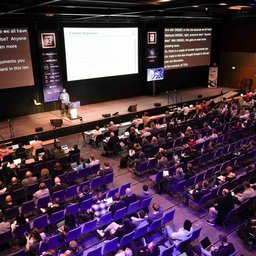
Mirjam Kühne opened RIPE 93, noting that this was the very first time that the RIPE Meeting has come to Sofia since this whole RIPE thing first began back in 1989. We have a pretty respectable 752 people registered for the meeting, with 250 of you attending online. We also have people tuning in from three local hubs in Lithuania, the Netherlands and Poland.

Mirjam ran through a few other items in the agenda - we’ve got quite some BoFs at this meeting, and on Tuesday the DEI session will be focusing on the I part of the acronym (inclusion). And, are our eyes deceiving us? A certain hitherto Secret Working Group is now openly inviting people to contribute and has even posted office hours? Now that's inclusive!

Our local host, Ivo Ivanov, CEO of DE-CIX, gave us a very warm and enthusiastic welcome to Sofia, the city he had called home for his first 20 years before moving to Germany. He also took a moment to recognise Dimo Nikolov and Svetoslav (Harry) Naydenov from BIX.BG for their fantastic work supporting interconnection among the local community and wider region. He also noted that the interconnection environment consisting of Frankfurt-London-Amsterdam-Paris was not enough anymore. What about the Iberian peninsula? FLAPI What about Sofia? FLAPIS! Hmmm, could use some work possibly.
Hans Petter Holen, RIPE NCC CEO, ran through some of the regular meeting logistics. He noted that while RIPE Meetings are where the community comes together, they are also an important source of feedback and direction for the RIPE NCC. We have a draft 2027 Activity Plan and Budget currently published for input, which will be discussed at the RIPE NCC Services WG and at the GM on Wednesday. If you plan to attend the latter, just a reminder that you do need to be registered in advance and will need that GM sticker on your meeting badge to get into the room. You can ask about this at the registration desk if you missed all of our emails and want to register.
Massimiliano Stucchi, RIPE PC Chair, followed with a welcome on behalf of the Programme Committee. Two challenges affecting them at the moment: AI generated slides and figuring out who gets the Friday morning slot. At this meeting they've also converted one presentation slot to lightning talks, which reflects the more lightweight submissions they've been getting, and maybe it’s better for us to just get to the point anyway. Mirjam also added that there are useful tips for presenters on the meeting website, including a self-paced workshop in the RIPE NCC Academy.

With all the welcomes and housekeeping out of the way, Tobias Fiebig and Franziska Lichtblau invited audience members to consider the rather controversial possibility that they might not actually always be right and that the ideas of others might even have some value. Paradoxically, it is often a long history of being right that produces the various risks around false certainty or groupthink that the pair touched upon. Their prescription: allow space for others to speak up and to grow, revisit longstanding axioms from time to time, invite and accept feedback from others, and - gah! - engage in a bit of self-reflection.
Your network supports IPv6. But does your application? NIC.br’s Sávyo de Morais next joined us remotely to talk about the gap between deploying IPv6 connectivity and making services actually work without IPv4. To help with this, he gave us a quick demo of v6bench, which is an open-source tool that creates test environments covering IPv4-only, dual-stack and IPv6-only connectivity, including transition mechanisms such as NAT64. Built around Docker containers and informed by IETF guidance on application testing, it provides a way to check application behaviour across different network conditions.
Second Plenary
First up in the second plenary session of RIPE 93, Maria Matejka, BIRD/CZ.NIC, explained NETCONF, which helps users configure network devices. She explained that there are multiple standards for exchanging YANG data: XML, JSON and CBOR. This makes things complicated, as you must sometimes convert data from one language to another. Although, she noted you can decode CBOR even if you don’t understand it (thank goodness, because this writer sure doesn’t!).

Next, Petya Vasileva, Plovdiv University/University of Michigan, presented about aligning path changes with measured impact in research and education networks. She and her team focused on data related to the Large Hadron Collider at CERN. The collider smashes particles, which produces huge amounts of data, about three petabytes each time. However, 80% of the Worldwide LHC Computing Grid resources are outside CERN, most of them spread around the world. So Petya and co. focused on seeing what happens to this data, doing measurements on latency, bottlenecks and intermittent packet loss. Interestingly, they found high packet loss in UK corridors, such as on the AMS-LON cable fault. She called on NOCs and NRENs to share their own incident records to support this research.
Next were three electrifying lightning talks. Sam van Kampen, RIPE NCC, took us through time, looking into the past, present and future of RISwhois. Sam explained that RISwhois offers a look into routing. However, until now, there was no test suite, limiting the RIPE NCC’s ability to develop it. Now there is one, and the team has worked to improve speed, maintainability and extensibility. Additionally, Sam shared the fun fact that this is the RIPE NCC’s first production Rust service, which he praised as a low barrier to doing it right. Now the RIPE NCC can update data more often - hourly instead of once every eight hours.
Next we dove even deeper into RIS with a talk from Ties de Kock, also from the RIPE NCC. He explained what kinds of data the RIPE NCC collects for the service and how peers are chosen. There are 23 route collectors in total, with many BGP peers per each one.

Ties noted that there was a huge increase in data volume starting in 2020 due to an increase in peers, but now the peering strategy was more selective. Some peers send quite a lot of data, but this is not necessarily a bad thing, just a reflection of local routing. He noted that the goal of RIS was not to capture geographic locations but BGP topology, aiming to maximise visibility while keeping the archive size manageable.
Finally, Tobias Fiebig, TU Wien, presented about Time to Live (TTL) jumps, or unexpected TTL rewrites affecting traceroutes. He and his fellow researcher Johannes Zirngibl, Max Planck Institute for Informatics, found that some devices rewrite the TTL, often obscuring the rest of the path and leading to incorrect inferences about the traceroute. This did not seem to be intentional, according to their research, so the reason behind this was still unclear. One possible explanation is that this could be partly caused by Broadcom ASICs lacking a TTL to push when one packet is encapsulated multiple times. Robert Kisteleki asked about routing loops and whether there are eternal packets in the Internet, and would we ever know? Spooky!
BoF: Let's talk about some topics of interest at the IETF
This BoF was intended to be a bidirectional discussion on a number of key topics at the IETF that are relevant to network operators. The topics discussed were:
- AI and how it is changing the landscape of networking
- Post-Quantum Cryptography (PQC)
- Operational Topics (IPv6, DNS, Routing)
- Space
So nothing too big or existential, basically. On the topic of AI, two new WGs have been chartered: AGENTPROTO WG will focus on enabling interoperability for AI agent applications across the Internet, and DAWN WG will focus on AI resource discovery and is oriented towards using (m)DNS.
On the topic of PQC, there is ongoing work in several WGs touching on algorithm definitions, procedures, and guidelines for PQC. On operational topics, v6ops is working on defining what IPv6-only and IPv6-mostly mean. There is an ongoing approach to separate the DNS Operations from the DNS extensions, resulting in a second DNS WG at the IETF soon.
On the space topic, the TIPTOP WG is discussing how IPv6 address blocks should be allocated and managed for celestial bodies. One approach would be to separate out technical requirements from the policy side of things.
There was a lively discussion on how can the IETF engage better with the operators and how to incentivise them to take part in discussions at the IETF. Several members of the community highlighted both opportunities for cooperation but also the challenges faced by operators (and other stakeholders) when engaging with the IETF processes. An experiment could be to hold the v6ops interim meeting at the next RIPE Meeting. A topic that was also floated was if there was interest for dedicated (IETF) workshops at future RIPE Meetings.
BoF: Maybe it is time to consider layer 3 Internet exchanges
The BoF in the side room started with James Rice intending to give a 10-minute introduction, which maaaaybe ended up being a little too much of a deep-dive into the historical context and current developments surrounding IXPs and transit providers. After 30 minutes he wrapped-up by noting that his slides were on the website and people might want to read them.
Over to Chris Van Fossen who, despite being an industry veteran, was attending his very first RIPE Meeting. He shared some insights into Google's Layer 3 IX before, with 20 minutes left on the clock, it was over to the panel with questions from the very patient audience who had been listening "for a long time".
Feedback from the audience and some panelists leaned cautious regarding a transition toward Layer 3 IXPs. Could this simply shift operational complexity from one part of the system to another? And if it was such a clear improvement, why hadn't it happened already? Gert Döring noted that Layer 2 IXPs keep control in the hands of the participants, while Wolfgang Tremmel cautioned that handing over control in a Layer 3 model could "open a can of worms".
And that was it for Day 1 at RIPE 93. Attendees found their way up to the Welcome Reception.
Comments 0