CEO of SkyTel LLC, Georgia’s third-largest fibre-to-the-home (FTTH) Internet service provider (ISP) and leading fixed wireless access (FWA) operator, with over 58% of the country’s FWA market. Focused on SkyTel’s strategic development, network expansion across Georgia and international partnerships, as well as digital infrastructure and cloud connectivity in the South Caucasus.
SkyTel is part of TeamGroup.am/team-holding/portfolio/skytel alongside Team Telecom Armenia.
AI factories create several traffic systems at once, and power is shaping where they can be built. This article asks what operators can see, what stays private, and who decides how these systems are connected.
After building private backbones, content and cloud platforms are now moving closer to users. In doing so, they are taking on delivery roles once associated mainly with independent CDNs.
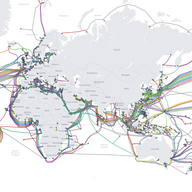
Content and cloud platforms are no longer just the largest customers of global connectivity. They are increasingly financing and building the infrastructure itself, from submarine systems to edge and data center footprints.
Antonio,
I believe both are part of the answer. It is not always easy to identify AI traffic, especially when AI is part of other applications.
But in many cases you know the customer and what the connection is used for. For example, an operator connecting an AI factory knows that this traffic is related to AI, even without identifying every application.
At the same time, a lot of communication happens between accelerators inside the AI factory and never goes through the public Internet. So we won’t see it there, even if we get better at identifying AI traffic.
The numbers in the article show these different parts of the network. They don’t tell us exactly how much of the difference comes from each factor.
Update, September 2026: Meta’s newly announced Petal cable is another direct confirmation of the shift described in this article. https://engineering.fb.com/2026/09/21/connectivity/petal-petabit-transoceanic-subsea-cable/
Petal will span approximately 7,000 km between France and the United States, deliver 1 Pbps, and deploy multi-core fiber at transoceanic scale. But the strategic point is bigger than the capacity record. The project is led by Meta, the platform generating the demand. NEC will manufacture and install the system, Sumitomo Electric will supply the fiber, and Orange will support the French landing and terrestrial interconnection.
The traditional telecom ecosystem remains essential, but its role is changing. The initiative, capital allocation, route logic, and technical ambition increasingly come from hyperscalers. Together with Google’s private cable portfolio and Meta’s Project Waterworth, Petal reinforces the central argument: content and cloud platforms are no longer merely buying connectivity from operators. They are increasingly deciding where the global backbone is built and what it will look like.
The Internet’s new builders are already here.



Antonio, I believe both are part of the answer. It is not always easy to identify AI traffic, especially when AI is part of other applications. But in many cases you know the customer and what the connection is used for. For example, an operator connecting an AI factory knows that this traffic is related to AI, even without identifying every application. At the same time, a lot of communication happens between accelerators inside the AI factory and never goes through the public Internet. So we won’t see it there, even if we get better at identifying AI traffic. The numbers in the article show these different parts of the network. They don’t tell us exactly how much of the difference comes from each factor.
Update, September 2026: Meta’s newly announced Petal cable is another direct confirmation of the shift described in this article. https://engineering.fb.com/2026/09/21/connectivity/petal-petabit-transoceanic-subsea-cable/ Petal will span approximately 7,000 km between France and the United States, deliver 1 Pbps, and deploy multi-core fiber at transoceanic scale. But the strategic point is bigger than the capacity record. The project is led by Meta, the platform generating the demand. NEC will manufacture and install the system, Sumitomo Electric will supply the fiber, and Orange will support the French landing and terrestrial interconnection. The traditional telecom ecosystem remains essential, but its role is changing. The initiative, capital allocation, route logic, and technical ambition increasingly come from hyperscalers. Together with Google’s private cable portfolio and Meta’s Project Waterworth, Petal reinforces the central argument: content and cloud platforms are no longer merely buying connectivity from operators. They are increasingly deciding where the global backbone is built and what it will look like. The Internet’s new builders are already here.
Showing 2 comment(s)