






At the RIPE NCC, engagement happens in many different formats - RIPE Meetings, regional events, Open Houses, training courses, RIPE Labs, and more. But the questions behind all this activity are consistent: who are we reaching, how accessible is participation, and are people able to stay involved over time?
Each year, we review our work against the following three core objectives. In this article, I take a look at how we performed in 2025 to see where the numbers show progress, and where we need to continue refining our approach. Here are the relevant objectives as defined in our 2022-2026 strategy:

Supporting an open, inclusive and engaged RIPE community
This objective is all about participation: who shows up, who doesn’t, and who comes back. RIPE NCC-organised events are central to that picture, but they’re only part of it. We also support wider industry events, run online sessions, and invest in formats designed to lower barriers to entry and support sustained engagement.

RIPE Meetings
Attracting hundreds of attendees from around our service region and worldwide, RIPE Meetings remain the key RIPE community events of the year. This spring, RIPE 90 took place in Lisbon, Portugal, while our autumn meeting RIPE 91 brought the community back to Bucharest, Romania, exactly 10 years after our first RIPE meeting there.


As we see from the numbers across both meetings, one in every five attendees was a newcomer - and we like that number! Having 20% fresh faces points to a healthy injection of new perspectives, while the 80% returning for their second, fifth, or even twenty-fifth meeting means those newcomers are stepping into a stable community of experts with strong institutional memory.
Making RIPE Meetings inclusive and accessible is key to striking this balance, and there are a number of initiatives we pursue to this end, such as the RIPE Academic Cooperation Initiative (RACI) and the RIPE Fellowship programme.
The RIPE Fellowship was originally launched to lower barriers to participation by supporting newcomers from underrepresented regions to attend RIPE Meetings. In 2025, we redesigned and relaunched the programme to move beyond one-off attendance support and focus on longer-term engagement through structured learning paths, personalised coaching, and community-building activities that help RIPE Fellows connect with peers and the broader community. By emphasising sustained participation and relationship-building, the new RIPE Fellowship aims to bring fresh voices into the community in a way that encourages ongoing contribution and deeper involvement over time.
Organising RIPE Meetings requires careful financial stewardship. In 2025, our Events Team negotiated nearly €150K in improved venue and supplier terms across RIPE 90 and RIPE 91, alongside securing strong sponsorship support. Managing both costs and income in this way helps keep our meetings high quality, accessible and financially sustainable.
Regional events
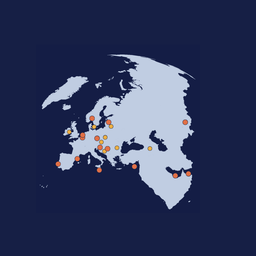
RIPE Meetings take place twice a year in two locations, but our service region spans a vast geography. This means that, for many community members, attending in person involves long journeys, visa hurdles and significant costs. We therefore organise regional meetings that bring the community closer to home, strengthen local connections, and create space for focus on regional priorities and challenges that may not surface at larger meetings. The rapid growth of CAPIF, now our largest regional event after just four years, reflects strong demand for this approach.
We support these meetings with tailored regional updates and our Advancing Internet Technologies in… RIPE Labs reports, alongside in-person training on RPKI and IPv6, and academic sessions that build links with research and education networks.
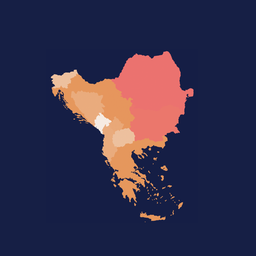
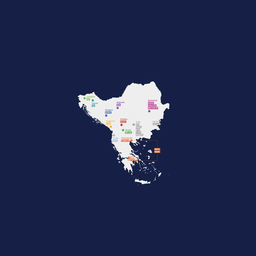
SEE 13
Our trio of regional events always starts in spring in the SEE region, this time with SEE 13.

Analysis: Advancing Internet Technologies in South East Europe
Report: As Seen At SEE 13
Agenda highlights:
- The IXP landscape in the SEE region: Initial Findings
- RPKI Deployment and IPv6 Uptake in South East Europe
- Assessing the Internet in the SEE Region
Learning and development (9-11 April): LIR Training Course | Advanced IPv6
CAPIF 4
The fourth Central Asia Peering and Interconnection Forum, CAPIF 4, was our largest regional meeting to date with 328 attendees:

Analysis: Advancing Internet Technologies in Central Asia
Report: CAPIF 4 - Grounded in IPv6, Looking to Orbit
Agenda highlights:
- Next Generation IPv6: Unlocking Kazakhstan's Digital
- FutureMeasuring Connectivity and Pathways
- Space Internet: Beyond the Last Mile
Learning and development (22-24 September): Advanced IPv6 | IPv6 Security
MENOG 25
With attendees from 37 different countries, the twenty-fifth meeting of the Middle East Network Operators’ Group and Peering Forum (MENOG 25) marked our most geographically diverse regional event in 2025:

Analysis: Advancing Internet Technologies in the Middle East
Agenda highlights:
- Mapping Internet Resilience: Insights from RIPE Atlas on Cable Outages
- Review of IXPs in the Middle East
- Let's Measure IPv6
Learning and development (24 - 25 Nov): IPv6 Fundamentals | BGP Routing Security
If you can't measure it, you can’t improve it. The Net Promoter Scores (NPS) featured in all of the above visualisations are a useful metric to track here. We strive for excellence, aiming for scores higher than 50 out of a possible -100 to 100. Like last year, we’re happy to see that we exceeded that goal for both the RIPE Meetings and regional meetings, hitting an impressive average NPS of 77 across our major events in 2025 - comfortably above our target benchmark of 50.
More targeted initiatives
RIPE Meetings and regional events cover a lot of ground, but some topics need more dedicated time to get things moving from broad discussion to progress. That’s why we also run a range of smaller, more focused events, including Internet Measurement Days, Roundtable Meetings, hackathons, face-to-face training sessions and academic events.
Over the past year, that’s included hands-on work with RIPE Atlas and local connectivity data at Internet Measurement Day in Tajikistan, policy-focused discussions with governments and regulators at the Roundtable Meeting for Arab Governments and Regulatory Authorities and the fifth SEE Government Roundtable Meeting, and practical collaboration at the DNS Hackathon, where participants tackled real-world DNS challenges together. These targeted formats give the community space to go deeper, solve problems collaboratively, and build momentum in areas that benefit from sustained attention.
Supporting wider industry events
Beyond our own meetings, a wide range of industry events takes place each year, helping to keep the community aligned and informed. We contribute to many of these by sending staff to share technical insights, through sponsorship, or by doing both. In 2025, RIPE NCC colleagues engaged in 76 community events across our service region and beyond, including Network Operator Group (NOG) meetings, national and youth Internet Governance Forum (IGF) initiatives, peering and Internet Exchange Point (IXP) forums, academic events, and wider industry gatherings such as IETF and ICANN meetings.
These events give us an opportunity to share research and support collaboration across regions. One example was our ongoing analysis of submarine cable outages, which we presented in more than 20 talks throughout the year. Sharing our findings and the measurement methods behind them helped raise awareness of RIPE Atlas and was followed by increased deployment of RIPE Atlas probes and anchors worldwide to support further research.

Leveraging platforms for online engagement
Even with a strong focus on in-person engagement, the size of our service region means online channels remain essential for keeping the community informed, connected and involved. Two of our main platforms for this are RIPE NCC Open Houses and RIPE Labs.
RIPE NCC Open Houses
RIPE NCC Open Houses are designed to be easy to join and open to everyone, giving the community a space to dig into topics that are emerging in ongoing discussions and current developments. In 2025, we hosted 10 Open Houses, covering everything from the role of Internet Exchange Points (IXPs) in South East Europe to the RIPE NCC Strategy for 2027-2031.
We also used Open Houses to support community engagement and participation, including sessions on the relaunch of the RIPE Fellowship, the RIPE 90 newcomers debrief, and an opportunity to meet the RIPE NCC Executive Board candidates. Coordination and governance topics featured strongly too, with a NOG organisers discussion, a session on the WSIS+20 process, and two sessions dedicated to updating ICP-2.
RIPE Labs
RIPE Labs is a platform for the community, by the community. Network operators, researchers, developers and others across the Internet ecosystem use it to share case studies, research, best practices and prototypes. RIPE NCC staff also contribute, but keeping the balance tilted towards external authors is important, because RIPE Labs works best when it reflects the wider community.

In 2025, RIPE Labs published 107 articles and six podcasts, with 57 articles (53%) coming from community authors. We also held two article competitions, attracting 16 entries, with winning pieces on cloud edge infrastructure performance and keeping network sites online during blackouts. Among the most-read articles of the year were contributions on the role of IXPs, digital governance, end-to-end encryption, IPv6 routing with WireGuard, and API key usage in the RIPE Database.
The six podcast episodes published in 2025 continued to explore the human and governance dimensions of the Internet, with conversations ranging from rewilding the Internet with Maria Farrell, to unpacking how the Internet actually works with Hisham Ibrahim, and reflecting on ICP-2 and the RIR lifecycle with Andrei Robachevsky.
Enhancing communication and multilingual support
Reducing language barriers remains a key part of keeping engagement accessible across our region. Following the launch of the RIPE NCC Language Centre in 2024, we expanded it further in 2025, growing from six languages to nine.
We continued translating selected materials, including several of the reports published through the year on RIPE Labs and several policy and governance briefings such as the WSIS fact sheet. And we also continued to provide translation options at events, such as the simultaneous interpretation in Russian and Farsi at CAPIF 4.
A major milestone was the translation of our IPv6 Fundamentals course into Ukrainian and Russian, with 30 videos produced in each language. These have since become some of our most-watched YouTube content, indicating a demand for technical training in multiple languages.
Enhancing skills and operational awareness through learning and development services
2025 marked 30 years of RIPE NCC training. The Internet has changed dramatically since 1995, but the need for practical skills, shared knowledge and operational coordination has stayed constant.
One of the biggest additions this year was the launch of our new IPv6 Advanced e-learning course in the RIPE NCC Academy. Building on the strong uptake of our IPv6 Fundamentals and IPv6 Security courses, this forms the next step in the IPv6 learning path. It’s one of the most comprehensive courses we’ve developed to date, combining in-depth content with a large number of labs and practical exercises designed to help learners design and deploy IPv6 networks in real-world environments.

Alongside this, our Learning and Development team delivered 56 training courses across 25 locations as well as 31 webinars, combining hands-on learning with online sessions that anyone can join. To help manage costs, 17 of our courses were hosted by community members, across 7 of the 25 locations where we delivered in-person training.
IPv6 remained a central focus, but we also covered key operational topics including BGP, Internet Registry processes, measurements and tools, and network security. In total, our in-person courses reached 854 participants, while 511 learners joined our webinars. Feedback remained consistently high, with webinars scoring an NPS of 61 and in-person training reaching 86.
The RIPE NCC Academy, our free self-paced learning platform, continued to grow. Since its relaunch in 2020, it has reached 19,128 registered learners, with 2,709 new learners joining in 2025 and 4,382 active learners over the year. Across all courses, more than 24,000 modules were completed in 2025 alone, with IPv6 Fundamentals and the RIPE Database courses drawing the most engagement. Quality remained strong too, with an average module rating of 4.69 out of 5. In addition to the IPv6 Advanced course, we also introduced a microlearning tutorial on API keys in the RIPE Database.
Our certification programme continued to expand. Over the year, 656 certification exams were completed and 535 digital badges earned. We also introduced a new certification exam linked to the LIR Fundamentals course and continued improving our exam platform to support quality and review processes. Participation was supported through campaigns such as our summer initiative offering free exam vouchers, and live testing at RIPE 90, RIPE NCC Days, CAPIF 4, RIPE 91 and MENOG. Overall, the programme recorded an NPS of 50.
Looking ahead, we will keep refining our training formats and learning paths to ensure they remain accessible, relevant and genuinely useful for the community.
Strengthening Internet coordination, collaboration, and governance through engagement and insight production
Delivering data insights
A core part of our mission is turning Internet measurement and Registry data into clear, accessible insight for the community. In 2025, our research and data storytelling work continued to bring together researchers, Internet analysts and communications specialists to translate complex datasets into reports, articles and visual stories that help explain what is happening on the Internet, and why it matters.

Our regional Advancing Internet Technologies reports remained a central pillar of this work. Published alongside events such as SEE 13, CAPIF 4 and MENOG 25, these reports combined data on Internet number resource distribution and the uptake of technologies such as RPKI and IPv6 with regional context, local initiatives and geopolitical factors. They provide policymakers and operators alike with a grounded, evidence-based view of Internet development across our service region.
Alongside these regional analyses, we continued publishing in-depth articles and presentations examining operational incidents and long-term trends. This included work on submarine cable breakages and resilience using RIPE Atlas data, our report on the evolving IPv4 transfer landscape, our analysis of the role of IXPs in South East Europe, and practical guides on using tools such as Khipu and the RIPE Database. Together, these outputs strengthen operational awareness while supporting more informed policy discussions.
Coordination, collaboration and governance
Our Government Roundtables remain an important forum for dialogue between public sector stakeholders and the technical community. In 2025, we held four Roundtables across Western Europe, South East Europe and the Middle East. Discussions covered topics including the WSIS+20 review process, safeguarding the interoperability and integrity of the global Internet, EU regulatory developments, regional IXP research, and routing security adoption across Arab states. These meetings provide space for technical insight to inform governance discussions in a neutral and constructive setting.
The WSIS+20 review was a central focus of our Public Policy engagement throughout the year. We submitted four formal responses across the consultation stages organised by the International Telecommunication Union (ITU) and the UN Department of Economic and Social Affairs, and participated in the UN General Assembly High-Level Meeting in New York in December 2025 where the outcome document was adopted. To help the community navigate this process, we published a dedicated WSIS+20 Fact Sheet and organised an Open House session to provide updates and context. (Read our recent RIPE Labs article on this topic.)
We also continued tracking major European regulatory developments relevant to the RIPE community, publishing updates on RIPE Labs and contributing to consultations on the EU’s external digital strategy and Internet governance. Our engagement extended to monitoring legislative initiatives such as the NIS2 Directive, the Cyber Resilience Act and related cybersecurity and digital policy developments.
Beyond policy discussions, we strengthened formal cooperation across our service region by signing eight Memoranda of Understanding (MoUs), aimed at improving coordination, transparency and shared understanding with partner organisations. Regionally, we supported capacity-building efforts across the Middle East, contributed data-driven analysis to initiatives with the League of Arab States, and participated in regional activities with the ITU and the Regional Commonwealth in the field of Communications (RCC), reinforcing the role of technical expertise in policy development.
Conclusion
The data gives us useful signals: who is showing up, what people are learning, and where collaboration is happening. But behind every metric is a conversation, a new connection, or someone finding their place in the community.
In 2025, our meetings attracted new participants while retaining experienced contributors. Our learning services continued to expand in reach and quality. And our coordination work became increasingly intertwined with global governance processes. Together, these strands point to a community that remains active, adaptable and technically grounded.
As we head into the next year, our focus stays the same: keeping participation open, strengthening operational expertise, and ensuring that technical coordination continues to inform the wider discussions shaping the Internet.










Comments 0