
Competitions
Article lead image

The RIPE Labs Article Competition - RIPE 93

Competition closed

Banner image

The RIPE Labs Article Competition for RIPE 93 is now closed. Thanks to everyone who submitted an article. We’ll announce the winner soon!

The RIPE Labs article competition for RIPE 93 is closed and the results are in!

The winning article is When Traceroutes Lie: How TTL Jumps Can Give Us a False Impression of the Internet’s Topology by Sebastian Kappes - a fascinating look at how routers can manipulate TTL values and distort the network topology we think we see in traceroute measurements.

Runner-up prize goes to Matthias Wichtlhuber and colleagues for The IRR Landscape: What RPKI Can Replace, third and final part of the series, where they ask which parts of the IRR ecosystem can already be replaced safely by RPKI, and which still cannot.

Many thanks to all entrants for their contributions, and congratulations to the winners!

If you want to learn more about the competition, including a more specific list of what we look from the best RIPE Labs articles, is available on the RIPE Labs Competition Rules page.


IRR3

The IRR Landscape: What RPKI Can Replace

Author image
Matthias Wichtlhuber

21 min read

In the third part of our IRR landscape series, we use traffic measurements from AMS-IX and DE-CIX to assess which parts of the IRR landscape can safely be replaced with RPKI. Third-party ROUTE(6) objects can largely be phased out, while third-party AS-SETs remain essential for BGP filter generation.

Article tags:

70 Please read the article before liking.
0
ipv8?

Questioning the IPv8 Proposal

8 min read

The IPv8 proposal brings together routing, identity, and network management into a single design, but does it leave too many operational questions unanswered?

Article tags:

53 Please read the article before liking.
2
geolocation

Towards Understanding City-Level Routing Using BGP Location Communities

Author image
Thomas Krenc

5 min read

BGP location communities offer a rare glimpse into where networks actually interconnect, but most remain undocumented and opaque. This work shows that, by exploiting a measurable spatial signal in routing data, it is possible to infer their city-level meaning at scale using only passive observation…

Article tags:

14 Please read the article before liking.
0
Deploying IPv6-first EKS

Deploying IPv6-first EKS on AWS: What Still Doesn't Work, and What It Saves

Author image
Spiro Stathakis

11 min read

In this field report on IPv6-first Amazon Elastic Kubernetes Service (EKS), the isp6 team shares which dependencies still drag IPv4 back in, what they learnt from /28s, and why the saving is large but not automatic.

Article tags:

27 Please read the article before liking.
0
Bangladesh outage

Inside a Shutdown: BGP Evidence from an Operator Who Was There

Author image
Md.Kamruzzaman Khan

18 min read

When Bangladesh vanished from the global routing table in July 2024, public routing data captured the event as it unfolded. Drawing on first-hand observations from inside one affected network, this article explores what that data can and cannot tell us.

Article tags:

32 Please read the article before liking.
4
v6 neighbours

Closing the IPv6 First-Packet Gap with GRAND

Author image
Seyed Pouria Mousavizadeh Tehrani

11 min read

There is a subtle asymmetry in IPv6 Neighbour Discovery: a host knows how to reach its router before the router necessarily knows how to reach the host. GRAND fixes that asymmetry by making the host proactively advertise its address, and I implemented that mechanism in FreeBSD.

Article tags:

32 Please read the article before liking.
0
email

Two Providers, a Stubborn Plateau and a Very Long Tail: Email in the Tranco Top-1M

Author image
Artem Berezin

7 min read

Ten years of DNS measurements reveal three trends across the Internet's most popular domains: email continues to consolidate around two providers, DMARC enforcement has hit a plateau, and a surprisingly large long tail of infrastructure defies easy classification.

Article tags:

154 Please read the article before liking.
4
scrubbing cover

Understanding DDoS Scrubbing in BGP: Five Leading Scrubbers

Author image
Shyam Krishna Khadka

9 min read

DDoS mitigation often relies on BGP for "scrubbing", but how this appears in routing data is not well understood. We analyse five major providers to distinguish between always-on and on-demand protection, showing how mitigation manifests in practice and what it means for routing visibility and RPKI.

Article tags:

24 Please read the article before liking.
0
DNS Abuse and Criminal Infrastructure - Beyond Definitions and Blocklists

DNS Abuse and Criminal Infrastructure: Beyond Definitions and Blocklists

Author image
Andrew Campling

8 min read

Evidence suggests that criminals may control a substantial share of new gTLD registrations. Although the precise scale remains contested, the article asks whether current DNS Abuse measures adequately address wider misuse of domain names.

Article tags:

25 Please read the article before liking.
1
Submarine Cable Map

The Internet’s New Builders

Author image
Arman Obosyan

11 min read

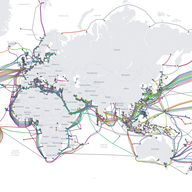
Content and cloud platforms are no longer just the largest customers of global connectivity. They are increasingly financing and building the infrastructure itself, from submarine systems to edge and data center footprints.

Article tags:

125 Please read the article before liking.
2
traceroute image

When Traceroutes Lie: How TTL Jumps Can Give Us a False Impression of the Internet’s Topology

Author image
Sebastian Kappes

7 min read

Traceroute is a powerful tool for uncovering how packets travel across the Internet. However, as we recently discovered, some routers tamper with the TTL values in traceroute's probing packets, giving you a false view of how networks are actually interconnected.

Article tags:

48 Please read the article before liking.
0