Banner image

Measurements and Statistics

All articles

Sand in the Gears

Sand in the Gears

Author image
Christian Teuschel

4 min read

Last Thursday, 1 June, RIPEstat suffered from the longest service outage in years. Although the root cause was, in hindsight, trivial, it took more than three hours to fully recover. As unfortunate as this outage was, the situation yielded vital take-aways that will hopefully help prevent future ou…

Article tags:

0 Likes are disabled for this article.
0
Save the Date: RIPE NCC Hackathon Version 6

Save the Date: RIPE NCC Hackathon Version 6

Author image
Vesna Manojlovic

5 min read

How appropriate - the topic of our upcoming sixth hackathon is IPv6! The event will happen on 4 and 5 November 2017 in Copenhagen, Denmark. Applications will open later in the summer - for now, please mark your calendars if you are interested, and start thinking about possible projects.

Article tags:

0 Likes are disabled for this article.
0
RIPE Atlas Coverage in Eyeball Networks

RIPE Atlas Coverage in Eyeball Networks

Author image
Petros Gigis

6 min read

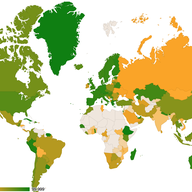
In this article we present a prototype web portal, which demonstrates the deployment of RIPE Atlas probes within eyeball networks based on Internet user population estimates per Autonomous System Number (ASN) per country. 

Article tags:

0 Likes are disabled for this article.
0
Focus on Switzerland - RIPE NCC Statistics and Data

Focus on Switzerland - RIPE NCC Statistics and Data

Author image
Fergal Cunningham

10 min read

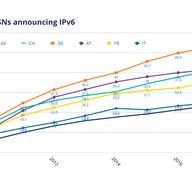
In this article, we take a look at what the RIPE NCC's data shows us about Switzerland. Nestled among some of the bigger countries in the RIPE NCC service region, it also gives us a chance to see how the Swiss compare with their neighbours.

Article tags:

0 Likes are disabled for this article.
0
Focus on Greece - RIPE NCC Statistics and Data

Focus on Greece - RIPE NCC Statistics and Data

Author image
Fergal Cunningham

10 min read

This article gives an insight into what the RIPE NCC's data shows us about Greece and its neighbouring coutries in terms of membership development, IPv6 deployment and RIPE Atlas coverage, among other factors.

Article tags:

0 Likes are disabled for this article.
0
Anycast_Picture1.png

Anycast Latency: How Many Sites are Enough?

Author image
JH Kuipers

4 min read

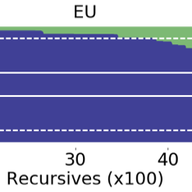
IP anycast is a popular way to scale up and distribute services across the Internet, with the aim of getting closer to end users. Using anycast, the IP address of a service is available in multiple places on the Internet — so-called anycast instances or sites — and Internet routing defines which in…

Article tags:

0 Likes are disabled for this article.
0
Results of the DNS Measurements Hackathon

Results of the DNS Measurements Hackathon

Author image
Vesna Manojlovic

11 min read

Reporting from the hackathon is difficult: the spirit of the event lies in direct participation and shared experiences. In this article, we celebrate the achievements of the fifth RIPE NCC hackathon, document and promote results, and create a memento for participants.

Article tags:

0 Likes are disabled for this article.
1
Turning on Anycast on B-Root

Turning on Anycast on B-Root

Author image
Giovane Moura

6 min read

The B-root operators have announced that they would enable IP anycast on 1 May 2017 [1]. In this article, we show how that change has been perceived by the RIPE Atlas probes, and if there were any transient effects of this change.

Article tags:

0 Likes are disabled for this article.
0
RIPE NCC Technical Services 2017 - Part Three: Focus on Tools and Research

RIPE NCC Technical Services 2017 - Part Three: Focus on Tools and Research

Author image
Kaveh Ranjbar

11 min read

Please find below the third part of our technical services update. This time we're focusing on our research activities and a number of tools we are developing.

Article tags:

0 Likes are disabled for this article.
0
BBR TCP

BBR TCP

Author image
Geoff Huston

25 min read

The Internet was built using an architectural principle of a simple network and agile edges. The basic approach was to assume that the network is a simple collection of buffered switches and circuits. As packets traverse the network they are effectively passed from switch to switch.

Article tags:

10 Likes are disabled for this article.
2

Showing 881 article(s)